Monoline Wedding Couple Design Vector: A Modern Take on Romance
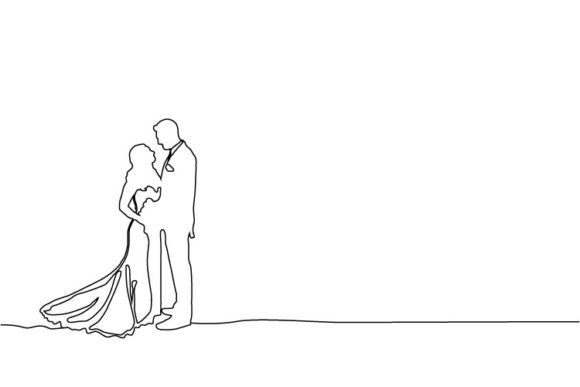
There's a particular kind of elegance that emerges when a single, unbroken line captures the essence of two people in love. The Monoline Wedding Couple Design Vector achieves exactly this—a continuous flowing stroke that traces the silhouettes of a bride and groom, creating an image that feels both contemporary and timeless. This design asset has quietly become one of the most versatile pieces in a creative professional's toolkit, and for good reason.
What sets this particular design apart is its restraint. Rather than relying on intricate details or heavy ornamentation, the monoline approach distills the wedding couple down to its most essential form. The result is an illustration that communicates romance, partnership, and celebration without overwhelming the viewer. It's the kind of design element that works equally well on a luxury invitation suite and a minimalist social media post—and that versatility is precisely what makes it so valuable.
Why the Single-Line Approach Resonates Across Design Contexts
Design trends come and go, but certain aesthetic principles endure. The monoline style taps into something fundamental about how we process visual information. Our eyes naturally follow continuous lines, which means a monoline illustration creates an almost subconscious sense of flow and harmony. When applied to the image of a couple, that flowing quality mirrors the narrative of two lives becoming intertwined.
For designers working on wedding-related projects, this quality is invaluable. The Monoline Wedding Couple Design Vector arrives in multiple formats—Ai, Eps, Svg, Png, and Jpg—meaning you can drop it into virtually any workflow without friction. Working in Adobe Illustrator? The Ai file gives you full editability. Need a transparent overlay for a website banner? The Svg or Png handles that beautifully. Printing a large-format backdrop? The vector files scale without any loss of quality, keeping every curve crisp whether it's displayed on a business card or a six-foot ceremony backdrop.
The clean aesthetic also makes this design remarkably adaptable to different color palettes and brand identities. A wedding planner with a soft, romantic brand might render it in blush pink or dusty rose. A modern venue with a more editorial approach could use it in black against a marble texture. The simplicity of the line work means it never clashes with its surroundings—it complements them.
Practical Applications That Extend Beyond Wedding Invitations
While the obvious use case is wedding stationery, limiting this design to invitations would be a missed opportunity. Consider how effectively it translates across these contexts:
- Logo and brand identity work: Wedding photographers, event planners, florists, and bakeries frequently need a visual shorthand for what they do. This couple illustration, when integrated into a logo or brand mark, immediately communicates the wedding niche without relying on clichéd imagery like rings or hearts. It's refined enough for a premium brand while remaining approachable.
- Social media content: Instagram posts, Pinterest pins, and Facebook headers all benefit from a strong central image. The monoline couple works as a standalone graphic or as part of a larger composition layered with text, textures, and supporting design elements. Its clean lines ensure it reads well even at smaller sizes—a critical consideration for mobile-first platforms.
- Packaging and merchandise: Think beyond paper goods. This design translates beautifully onto tote bags, candles, favor boxes, and custom apparel. The continuous line style has a handcrafted quality that consumers associate with artisanal, thoughtful products—exactly the impression most small business owners want to make.
- Print materials and editorial layouts: Magazine features, lookbooks, and brochures in the wedding industry benefit from consistent visual language. Using this monoline design as a recurring decorative element across multiple pages or sections creates cohesion without monotony.
- Website design and digital products: From hero images to section dividers, the vector format ensures web-ready crispness on any screen resolution. Digital product creators—those selling templates, planners, or printable wall art—find this kind of asset particularly useful because it adds perceived value without adding complexity to their production process.
Making It Work Within a Larger Design System
A single design element, no matter how beautiful, doesn't exist in isolation. The real power of the Monoline Wedding Couple Design Vector emerges when it's integrated thoughtfully into a broader visual system. Here are some practical considerations for getting the most out of it.
Font pairing matters more than you might expect. The monoline illustration has a specific personality—elegant, modern, slightly understated. Pairing it with an overly ornate script font can create visual tension, while a clean sans-serif might feel too sterile. The sweet spot often lies in a refined serif typeface or a sophisticated script that echoes the flowing quality of the line work without competing for attention. Test several combinations before committing, and pay attention to how the weight of your chosen typeface relates to the thickness of the illustration's lines.
Color strategy deserves careful thought. Monochrome applications—black on white, gold on navy, white on kraft—tend to feel the most polished. If you do introduce color, limit your palette. The illustration's simplicity means even a single accent color can feel abundant. For print projects, consider how the design interacts with paper texture and finish. A matte stock absorbs ink differently than a glossy one, which affects how those fine lines reproduce.
Scale and placement influence perception. Used large and centered, the couple illustration becomes the focal point—ideal for invitations, posters, or ceremony programs. Scaled down and placed in a corner or along a border, it becomes a subtle brand watermark. Both approaches are valid, but they communicate very different things. Think about the role you want this element to play in your composition before you start positioning it.
Whitespace is your ally. The monoline style thrives when it has room to breathe. Crowding it against text blocks, competing graphics, or dense patterns diminishes its impact. Give it generous margins, and let the simplicity of the line work do what it does best—draw the eye with quiet confidence.
Licensing and File Formats: What Creative Professionals Need to Know
Before incorporating any design asset into commercial work, understanding the licensing terms is essential. Most premium design resources come with specific usage rights that dictate whether you can use them in client work, sell products featuring the design, or modify the original files. Review these terms carefully, especially if you're a freelancer creating deliverables for paying clients or an entrepreneur building a product line.
The inclusion of five file formats in this particular package reflects an understanding of how modern creatives actually work. The Ai and Eps files preserve full editability for those working in professional design software. Svg files have become increasingly important for web and app design, offering lightweight scalability. Png files with transparent backgrounds are indispensable for quick compositing, while Jpg files serve well for presentations, proofs, and situations where transparency isn't needed.
Having all five formats means you won't waste time converting files or compromising on quality. It also means the asset remains useful as your projects evolve—what starts as a print invitation today might become a website header tomorrow, and the flexibility to move between formats without starting over is genuinely practical.
A Design Element That Earns Its Place
The creative professionals who get the most mileage out of their design assets share a common trait: they choose elements with inherent adaptability. The Monoline Wedding Couple Design Vector fits that description precisely. Its visual simplicity isn't a limitation—it's the source of its flexibility. It adapts to your color choices, your layout decisions, your brand personality, and your medium. Whether you're designing a one-off event invitation or building a complete brand identity for a wedding business, this kind of thoughtful, well-crafted illustration serves as a reliable foundation that you can build upon in countless directions.
That's ultimately what separates a useful design asset from a decorative one: the ability to solve real creative problems across diverse contexts while maintaining visual integrity. This monoline wedding couple design does exactly that, one elegant continuous line at a time.